Event Technology
Industry Perspectives
Community Building
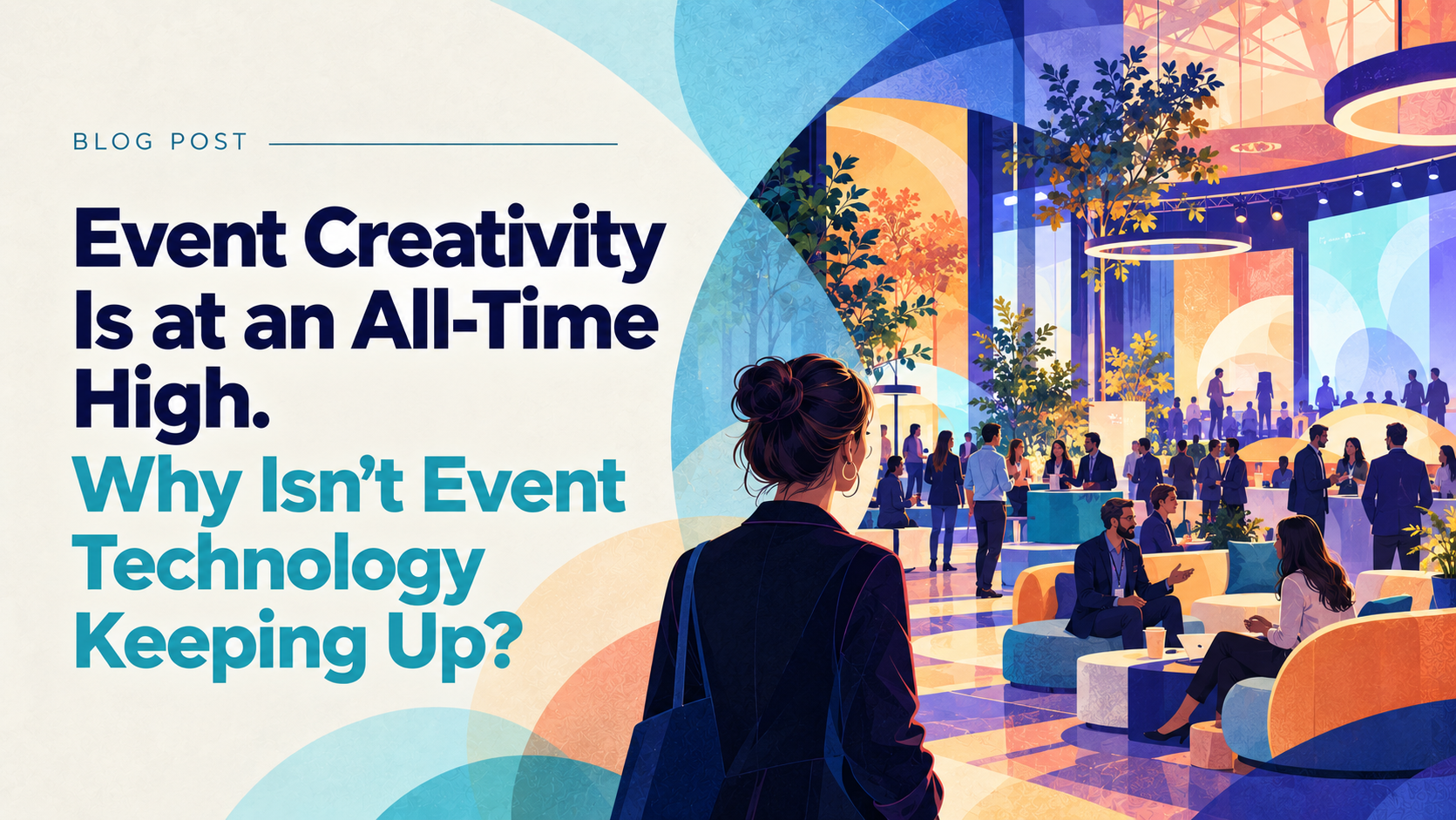

Events these days are amazingly creative. This year, more than ever before, I’ve seen event teams create some of the most interesting and connected physical experiences we’ve ever had. Event tech, on the other hand? Not so much.
The modern event app should be more than an agenda, map and attendee directory. It should help people navigate the event, discover relevant sessions, meet the right people, and continue those conversations after the event ends.
September and October are packed with major enterprise events. HubSpot UNBOUND, Dreamforce, Advertising Week New York, IMEX America, SKIFT Annual Meetings Forum, and ANA Masters of Marketing are all happening within a relatively short stretch of time.
I just got back from UNBOUND, and I don’t think what I experienced there is unique. I’ve seen versions of the same thing across plenty of events, and I’ve heard similar feedback from others attending major events over the last year.
Major enterprise events are getting more creative in how they use physical space. The lounges, stages, outdoor areas and meeting spaces have been around for years, but event teams are putting much more thought into what happens inside them, where they sit within the overall flow of the event and how they create reasons for people to stop, explore and connect.
At UNBOUND, one lounge was built around attendee-led conversations, giving people a reason to meet around topics they actually cared about. Another space brought product demos, experts, hands-on learning and support together in one environment. Outdoor areas gave people places to step away from the convention floor, and some session spaces were designed in ways that changed the feel of the presentation itself.
The UNBOUND team deserves a lot of credit here, because those were some of the most thoughtful spaces I’ve seen at any event.
That creativity is exactly why the digital side of events, at almost every major conference I’ve attended, feels like it’s lagging behind. The physical environment is being designed around discovery and connection, while the digital experience often still feels like a schedule, a map and a collection of lists. That’s a gap those of us building technology for event marketers need to close.
How should event technology help when an event becomes too big to take in?
Large enterprise events can be physically exhausting. I walked around 13 miles a day at UNBOUND, moving between sessions, activations, meetings, and different parts of the venue.
When you’re walking that much, there’s nothing worse than arriving at a session only to find out it’s full, and anyone who’s been to a big conference has probably done it. The app should help me understand capacity before I make the trip, where the session is relative to where I am, whether I realistically have enough time to get there and what nearby alternatives might be worth my time.
At that scale, the job of the digital experience shouldn’t simply be to give me access to everything. It should help me experience the event without making me do all the work of figuring it out.
Instead, the digital experience often takes all of the complexity of the event and puts it into lists. Here are all the sessions. Here are all the exhibitors. Here are all the people. Everything may technically be available, but the participant is still left to figure out how it all fits together.
Why doesn’t the digital experience feel like the event?
If an event creates a physical lounge where people gather around a topic, it should be easy to create a digital space around that same experience. If hundreds of people attend a session together, the session should be more than a calendar entry. It could also be where people talk about what they just heard, share something useful, see who else attended, or decide to continue the conversation somewhere nearby.
The same should be true of booths and activations. Event teams put an incredible amount of work into creating physical environments that get people to stop and engage, then those environments are often represented digitally with a logo, company description and booth number.
The hard creative work has already been done. The technology should give event teams the freedom to reflect that creativity digitally too.
The flow of the event should exist there as well. Sessions, people, exhibitors, and conversations shouldn’t feel like separate sections of an app, because that’s not how anyone actually experiences an event.
This matters even more for people who aren’t naturally outgoing. I’m not an extrovert, and walking into a crowd of strangers to introduce myself isn’t how I naturally connect.
At an event with thousands of people, I don’t really need an attendee directory containing thousands of names. I need the digital experience to help make that enormous crowd feel smaller.
Maybe someone is another founder. Maybe they’re dealing with a similar problem. Maybe we were both in the same session or expressed interest in the same topic. That context gives me a reason to connect, and without it, you can feel surprisingly alone while surrounded by thousands of people.
At Intrivium, we call this “digital hospitality”: using event technology the way a great host would, including helping participants feel welcome, understand where to go, discover what matters to them and find the people and conversations they came for.
That idea has shaped how we’ve built Intrivium. Rather than forcing every event into a fixed set of screens, the platform is configurable around the experience the event team has designed. A physical lounge built around attendee-led conversations can have a corresponding digital space where people discover the topics, find each other before they arrive and continue talking afterward. A session can become more than an agenda item — it can become a place for participants to connect around what they just experienced.
We definitely haven’t figured it all out yet, but we’ve seen how differently people use the app when it actually reflects the event.
Why has event technology prioritized reliability over experience?
There’s an understandable reason we got here.
At a large enterprise event, the app can’t go down. Thousands of people may pull out their phones at the same time. Venue Wi-Fi gets overloaded. People expect their schedules, maps and messages to appear immediately.
So it makes sense that event technology has spent a lot of time solving reliability and scale first. But that may also explain why the digital experience can feel conservative.
Schedules scale pretty predictably. So do directories and exhibitor lists. A living digital environment where thousands of people are talking, sharing and interacting around sessions is a much more ambitious technical problem.
If all of that additional activity might make the app slower or less reliable, it’s easy for participant experience to become something we address after everything else.
I understand the tradeoff. I just don’t think we should accept it forever.
Why are we starting over again at every event?
There’s another part of the experience that feels increasingly unnecessary.
I register for another event, download another app and enter my name, company, title, interests and profile information again.
This gets even more interesting when the host already knows me. Companies like HubSpot and Salesforce have relationships with a huge share of the people walking their halls, which puts them in a better position than almost anyone to make the event feel like a continuation of that relationship rather than a fresh start.
Of course, there are privacy and permission questions around that. I’m not suggesting that everything an organization knows about someone should automatically become part of an attendee profile.
But treating every event as though the relationship began when I downloaded its app feels outdated.
Even basic information could be reused with permission. Over time, the things I’m interested in, the people I’ve connected with and the experiences I’ve participated in could help make the next experience more relevant.
Why does the digital experience break down in the moment?
At large events, performance is part of the experience too.
You’re walking between sessions, trying to find a room or deciding what to do next. Then a page loads slowly, a QR code opens another web experience, another login appears or the venue Wi-Fi struggles.
A few seconds can feel like a long time in that environment, and eventually you put the phone back in your pocket.
The participant doesn’t care which vendor built each piece. We attended one event. The technology should feel like one experience too.
What happens after the event?
We spend all this effort creating connections, conversations and shared experiences over a few days, then too often let the digital environment go dormant when everyone heads home. If technology is meant to complement the participant experience, those relationships and conversations shouldn’t suddenly lose their home because the physical event ended.
The event may be over, but the interests people expressed, the content they engaged with and the relationships they formed haven't disappeared. The digital experience can become the bridge between one event and the next, giving participants a place to continue conversations, access content and stay connected to the community they just became part of.
Yo techies, we have some catching up to do.
If you’re thinking about the same questions — how event technology can better reflect the creativity of the physical experience, help people make more meaningful connections and keep those connections going after the event ends — we’d love to compare notes.
That’s exactly what we’re working on at Intrivium. Connect with us and tell us what you wish your event technology could do differently.