

Content & Programming
Attendee Experience
Industry Perspectives
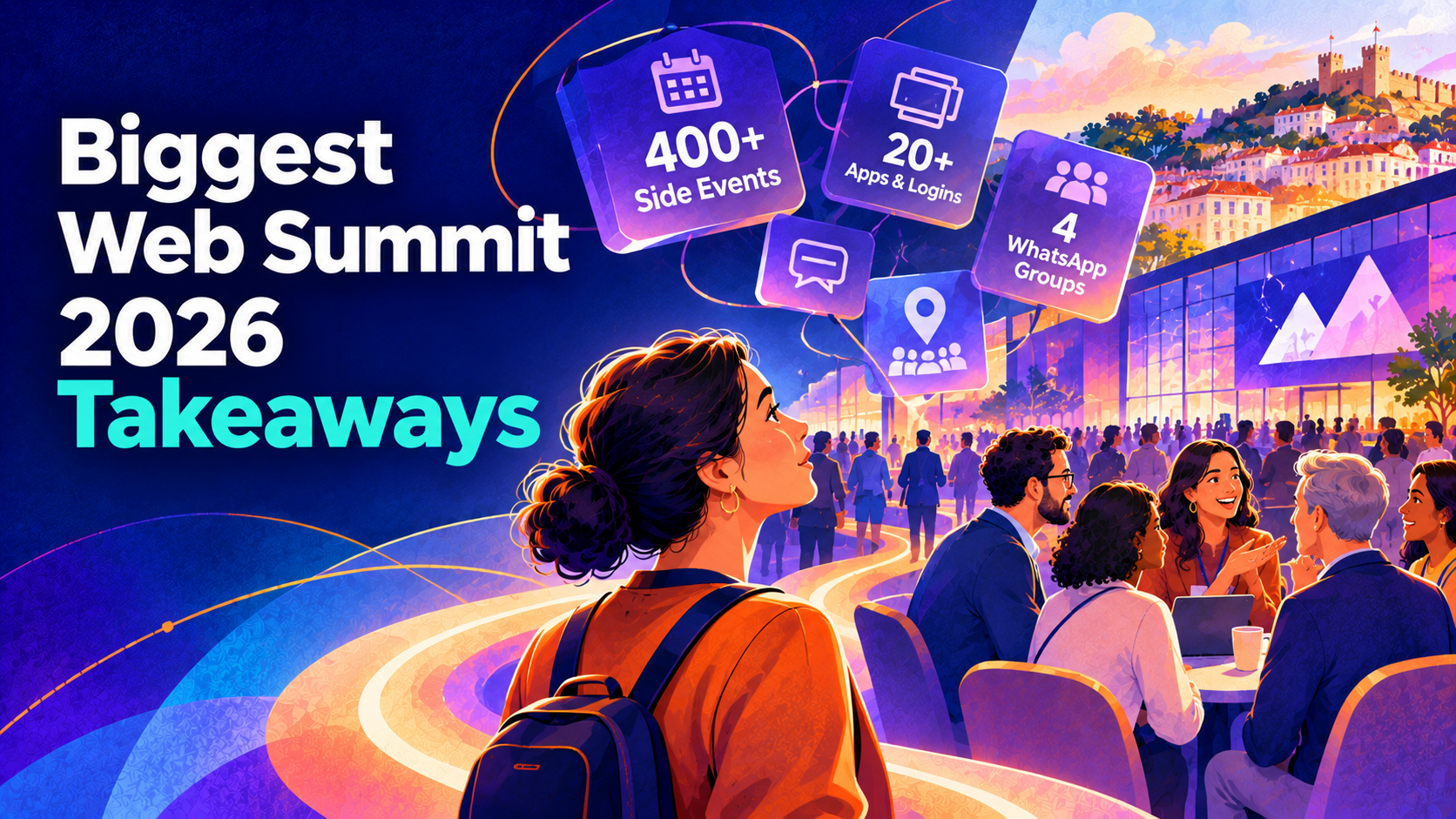

What Lisbon taught me about event technology and the communities forming outside the official agenda.
I thought we wouldn't have to use the word "pivot" again this century.
Then Storm Charles shut down Day 2 of Web Summit.
Suddenly, we were back on Zoom, making connections from our hotel room while our pants hung out to dry.
Welcome to Web Summit 2026.
Even before the storm, I was learning something about what attendees want from an event by watching what they organized around it.
Web Summit is a LOT.
Thousands of people. Incredible energy. Robots giving keynotes. (Seriously. I was proud of myself for leaving yesterday behind and strapping in for today, but apparently I skipped a few days and we're living in tomorrow.)
And then there was everything happening around the official event: more than 400 side events.
I joined four WhatsApp groups, collected a list of 380 side events, and made new friends on LinkedIn. There were meetups, conversations, and opportunities to connect happening everywhere.
At one point, I counted more than 20 different apps requiring separate profiles and login credentials.
400+
side events around the official program
20+
apps, each with its own profile and login
4
WhatsApp groups to keep up with
Twenty.
Across all those channels, attendees were sharing what they wanted to do, learn, and experience. Keeping track of it meant jumping between apps, groups, and conversations, even though we had an official event app.
One of the most interesting things I observed was how much activity attendees were organizing themselves. People were finding others with shared interests, arranging meetups, and sharing recommendations.
In the groups I participated in, people repeatedly described these connections and side experiences as the best parts of Web Summit.
We often hear that the only thing customers need from their event technology is to get attendees into sessions. I've been hearing that since 2013.
Attendees are showing us how much more they value.
They're finding their people and building connections around our events, often through tools that leave organizers with little visibility into what's happening.
I had hundreds of potential activities to consider, multiple WhatsApp groups, LinkedIn conversations, and meetings being arranged through different channels.
Trying to keep track of it all was becoming a full-time job.
Before I completely lost track of everything I'd joined, I started adding it to our Intrivium app. It was a quick setup, nothing elaborate, but suddenly my sessions, meetings, side-event meetups, and places I wanted to explore in Lisbon were all synced to my calendar.
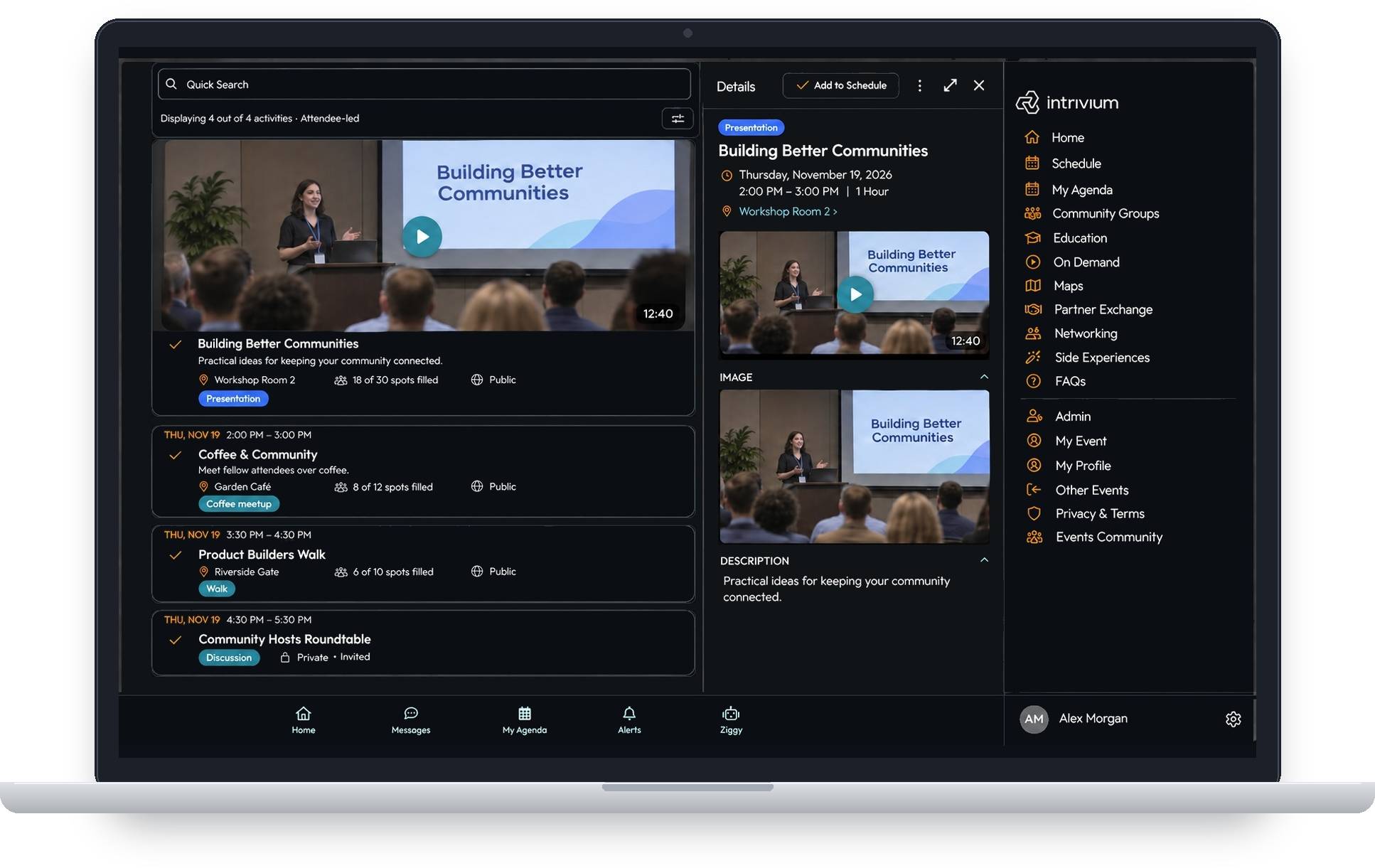
Sessions, meetups, and attendee-led activities in one schedule in Intrivium.
I could actually see what my week looked like.
Getting everything into one place helped. It also made me wonder why attendees have to piece their plans together themselves.
We've spent years building technology to help organizers manage registration, agendas, sessions, and reporting. Attendees have their own work to do: deciding what to attend, finding people they want to meet, and fitting those opportunities into the time they have.
Our technology should help them do that.
The experiences attendees create can tell organizers a lot about what people care about.
The topics that draw people together may reveal interests your program hasn't addressed. The people organizing gatherings may be community members you haven't met. Conversations happening outside your sessions may deserve a place on next year's agenda.
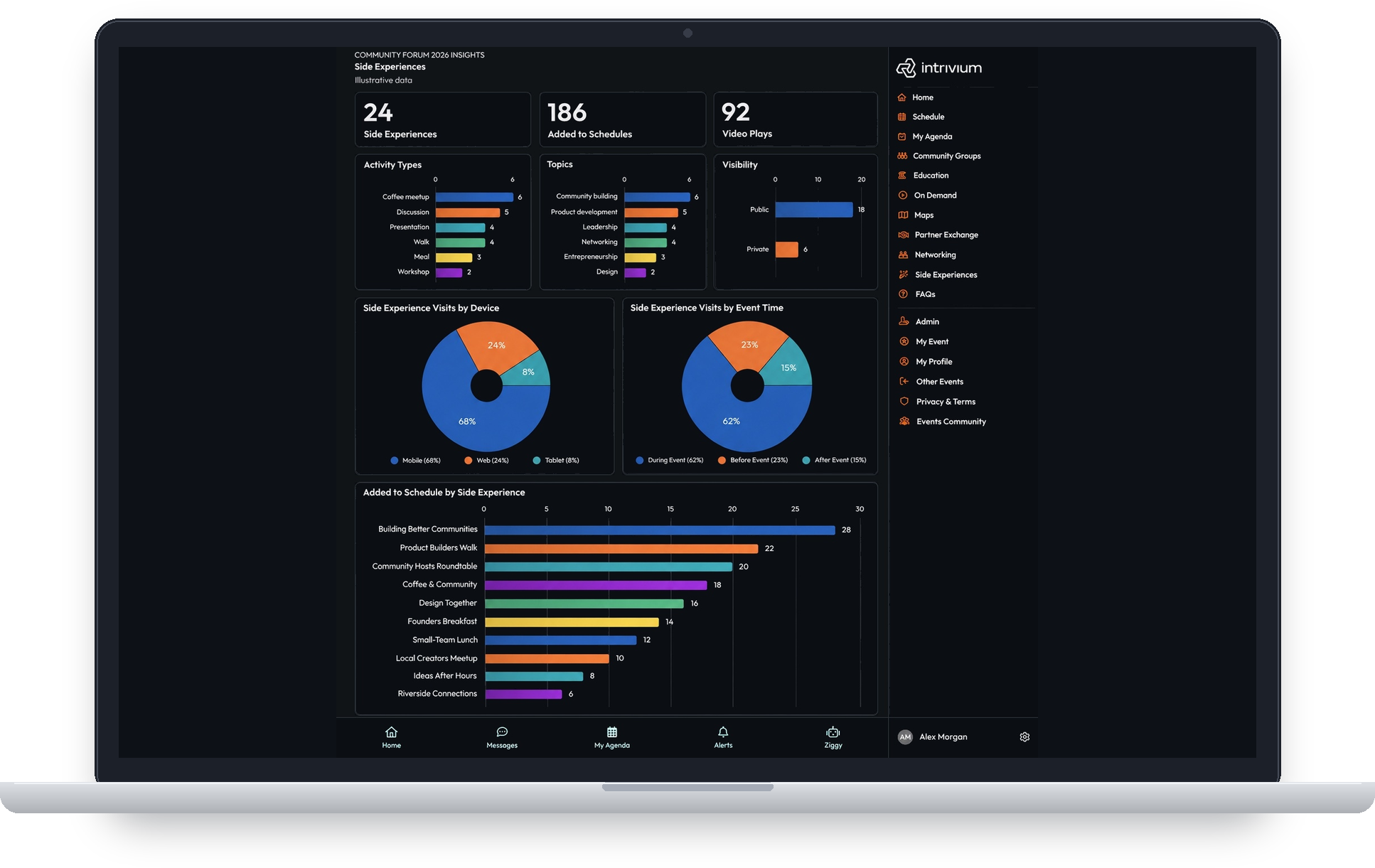
Intrivium shows organizers what attendees create on their own: popular topics, activity types, and which side experiences people add to their schedules. (Sample data.)
Those connections also give you something useful to build on after the event.
If people have formed a group around a shared interest, you have a starting point for relevant follow-up. You can help the conversation continue, introduce others who might contribute, or support another gathering.
That gives attendees a reason to stay involved and gives organizers a better understanding of what makes the event valuable to them.
I'd like to see more events where attendees can create their own meetups, invite others, and share interests alongside the official program, with a way to keep track of it all.
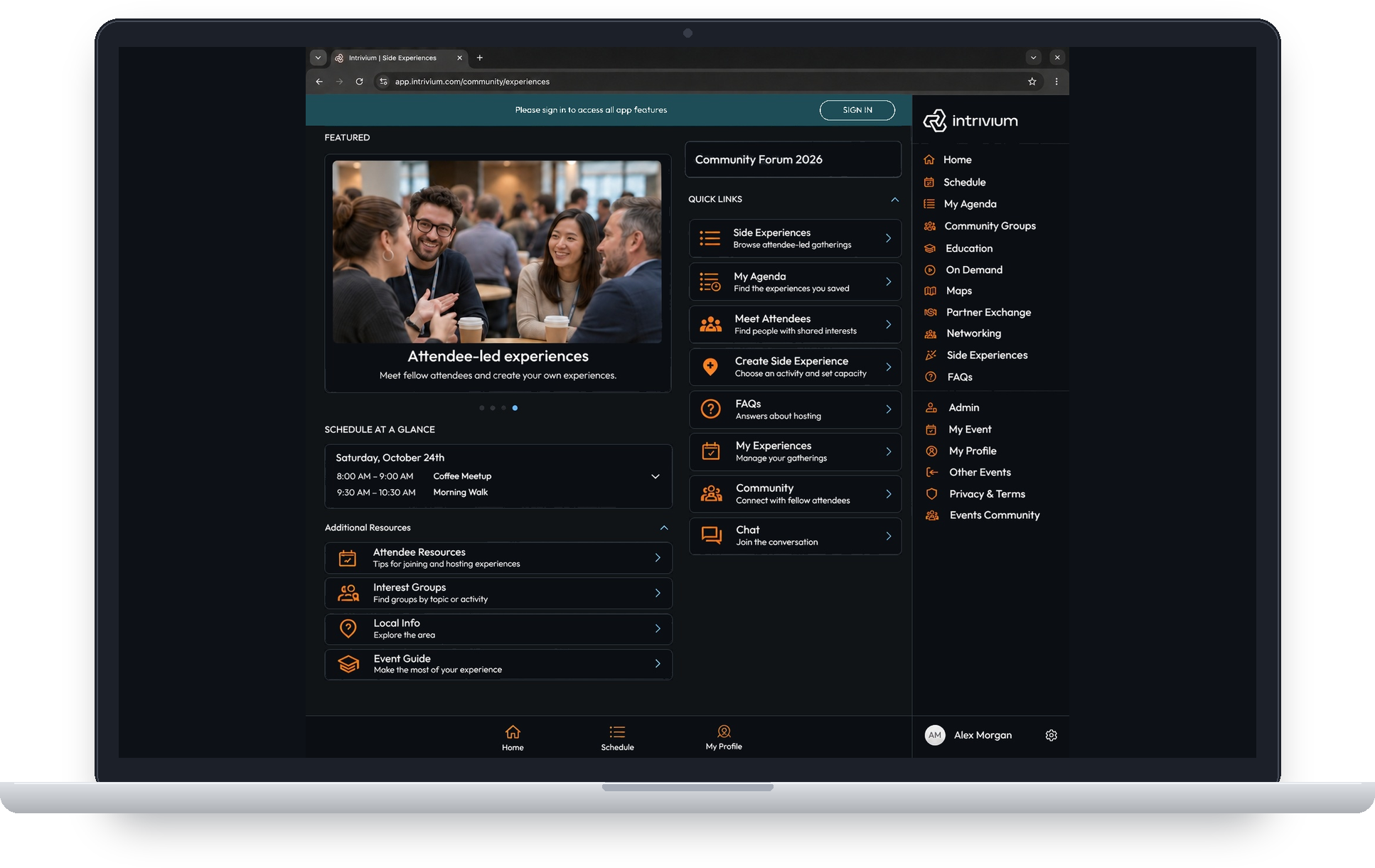
Attendees can browse, join, and create side experiences alongside the official program.
Organizers would need to decide what support they can offer and establish clear boundaries around participation. They could then use what they learn to improve the experience:
Future programming
Pay attention to the topics and experiences people organize themselves. They may reveal interests your formal agenda hasn't addressed.
Relevant follow-up
Continue conversations around the topics and communities people engaged with.
Community relationships
Get to know the people who bring others together and create value beyond the official program.
Some of this is already happening in WhatsApp groups, LinkedIn conversations, and side-event calendars. There's an opportunity to make it easier for attendees and learn from what they choose to create.
When Storm Charles disrupted Web Summit, the official experience changed overnight. The relationships we'd started building gave us a way to keep going.
We adapted, connected virtually, and continued our conversations.
I was surprised to encounter this much fragmentation at an event the size of Web Summit. It made me wonder how other organizers manage the side events happening around their official programs.
How are you supporting the experiences attendees create around your events?
If you’d like to give attendees one place to plan sessions, meetings, and side events, we’d be glad to show you how it works.